
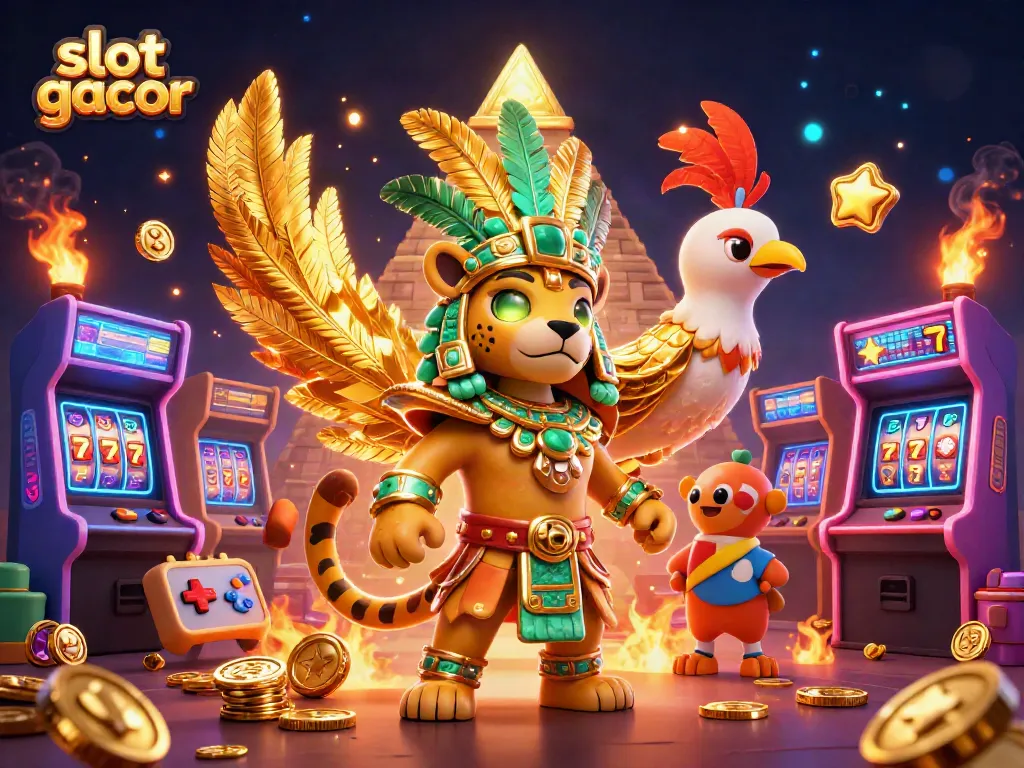
The phrase “slot gacor” is widely used in Indonesian-language online communities when people discuss slot games and gambling-related content. The word gacor is informal slang that generally means something is performing especially well, active, or producing frequent results. In the context of slot games, however, it is commonly used to describe a game that players believe is paying out or triggering winning combinations more frequently.
Because “gacor” is a slang term rather than a technical gambling concept, it is important to understand what people mean by it without assuming that a particular game is actually more likely to produce winnings. Slot outcomes are generally determined by programmed random systems, and previous results do not guarantee future results.
This article explains the meaning of “slot gacor,” common features associated with slot games, and terminology readers may encounter when researching the subject.
What Does “Slot Gacor” Mean?
“Slot gacor” combines the word slot, referring to a slot-machine-style game, with gacor, an Indonesian slang expression associated with something being unusually active or successful.
Online discussions may use “gacor” to describe a slot game that appears to produce frequent winning combinations, bonuses, or other noticeable events. The expression is often used casually and can vary considerably from one community to another.
Importantly, “gacor” is not an official classification or guarantee of a game’s performance. It does not mean that a particular game has better odds, is guaranteed to pay out, or can reliably produce profits.
People sometimes interpret short-term winning streaks as evidence that a game is “gacor.” Statistically, though, random systems can naturally produce clusters of similar outcomes. A short sequence of wins or bonus features does not necessarily indicate that the underlying odds have changed.
Common Features of Slot Games
Although individual games differ, many slot-style games share several recognizable features.
Reels and Symbols
Traditional-looking slot games display symbols on reels arranged in rows. When the reels stop, the resulting combination of symbols determines whether a particular game rule has been triggered.
Modern digital versions can use elaborate themes, animations, and different layouts. Despite the visual differences, the underlying outcome is generally determined by the game’s programmed rules.
Paylines or Winning Patterns
A payline is a defined pattern used to determine whether a combination of symbols qualifies as a winning result. Some games use traditional horizontal paylines, while others use alternative patterns or symbol-based systems.
The number and structure of these patterns depend on the individual game.
Bonus Features
Many slot-style games include additional features intended to make gameplay more varied. Examples include free-spin rounds, special symbols, multipliers, bonus rounds, and expanding or changing symbols.
These features are part of the game’s design. Their presence does not mean that the game is more likely to produce an overall profit.
Themes and Visual Effects
Modern slot games can be built around many themes, including fantasy, mythology, adventure, history, sports, and popular fictional concepts. Sound effects, animations, and visual effects are commonly used to make the experience more engaging.
These elements are primarily entertainment and presentation features rather than indicators of mathematical odds.
Common Terms You May Encounter
Understanding terminology can make online discussions easier to interpret.
RNG: Short for Random Number Generator. In digital gambling systems, an RNG is used to generate outcomes according to the game’s programmed rules. Random outcomes mean that one result does not automatically determine the next.
Volatility: A term used to describe the general pattern of payouts in a slot game’s mathematical design. Higher-volatility games are generally associated with less frequent but potentially larger individual payouts, while lower-volatility designs may have more frequent but smaller payouts. Volatility does not predict what will happen during a particular session.
RTP: Short for Return to Player. This is a theoretical percentage used to describe the amount a game is designed to return over a very large number of plays. For example, an advertised RTP of 96% would not mean that an individual player receives 96% of their money back. It is a long-run statistical concept.
Jackpot: A particularly large prize associated with certain games. Jackpots can have different structures and conditions depending on the game.
Bonus: An additional game feature or promotional element. In discussions about gambling, the word can refer to several different things, so its exact meaning depends on the context.
Free spins: A feature in some slot games where a player can receive additional spins under specified conditions. “Free” does not necessarily mean that there are no other conditions attached.
Multiplier: A feature that increases a qualifying payout according to a specified multiplier. Its effect depends on the rules of the particular game.
Why “Gacor” Can Be Misleading
One of the most important things to understand about the phrase is that it can create the impression that some games are temporarily “hot” and therefore more likely to produce favorable results.
That interpretation can be misleading.
If a game uses a random-number system, previous outcomes generally do not cause the next outcome. A series of unsuccessful results does not automatically mean a win is “due,” just as a series of successful results does not mean another successful result is guaranteed.
This is related to a common reasoning error called the gambler’s fallacy: the belief that an independent random event becomes more likely simply because a particular outcome has not occurred recently.
Online communities may also use terms such as “gacor” based on personal experiences, anecdotes, screenshots, or short-term observations. These examples cannot establish the actual mathematical probability of future results.
Marketing Language vs. Technical Information
When researching gambling-related terminology, it helps to distinguish between marketing language and technical information.
Words such as “hot,” “gacor,” “easy win,” or “frequent payout” may be informal descriptions used by communities or promotional material. They should not automatically be treated as evidence of better odds.
Technical concepts such as RNG, RTP, and volatility have specific meanings and can provide a more useful framework for understanding how games are designed.
This distinction is especially important because gambling-related content can sometimes present subjective experiences as though they were statistical facts.
A Responsible Way to Understand the Topic
For someone researching “slot gacor” as a cultural or internet term, the safest approach is to treat it as slang rather than a promise of performance.
The term is useful for understanding Indonesian online vocabulary and the way gambling communities discuss perceived winning patterns. It should not be interpreted as proof that a particular game is guaranteed to win or that a certain strategy can overcome random outcomes.
Learning the terminology can also help readers recognize misleading claims. Understanding concepts such as randomness, probability, RTP, and volatility provides more reliable context than relying on claims about a game being “hot” or “gacor.”
Conclusion
“Slot gacor” is an informal expression commonly associated with the idea that a slot game is producing frequent or favorable results. While the term appears frequently in online discussions, it is not a technical guarantee, official classification, or reliable prediction of future outcomes.
The broader vocabulary surrounding slot games includes terms such as RNG, RTP, volatility, paylines, bonuses, free spins, multipliers, and jackpots. Understanding these terms can help readers distinguish genuine technical concepts from informal claims and marketing language.
Ultimately, a game’s recent results cannot reliably predict its next result when outcomes are generated through a random system. For that reason, phrases such as “gacor” are best understood as community slang rather than evidence that a particular game is guaranteed to perform better.